I build the operational systems that scale service businesses — replacing duct-taped SaaS with native, AI-driven architecture that captures lost revenue.
I build systems that bridge the gap between technical engineering and business operations. The most expensive bottlenecks live at the seams between functions — and I architect the connective tissue to close them.
Running my own companies taught me early that great code is useless if it doesn't drive the bottom line. So I stopped treating software as a subject to study and started treating it as leverage — a way to manipulate outcomes and recover revenue.
I wrote my first Python script at 12, in an accelerated computer-science program led by an MIT Sloan Fellow. The curriculum wasn't syntax for its own sake — it was applying Python, SQL, and data modeling to real business and financial problems. That shifted everything.
I took those fundamentals and started my first company, building custom gaming PCs. The hardware was only half the product: I wrote my own software to strip down and tune Windows for performance, then coded the storefront from scratch to sell the rigs. Years of reps — building, breaking, and learning how architecture actually functions under the hood.
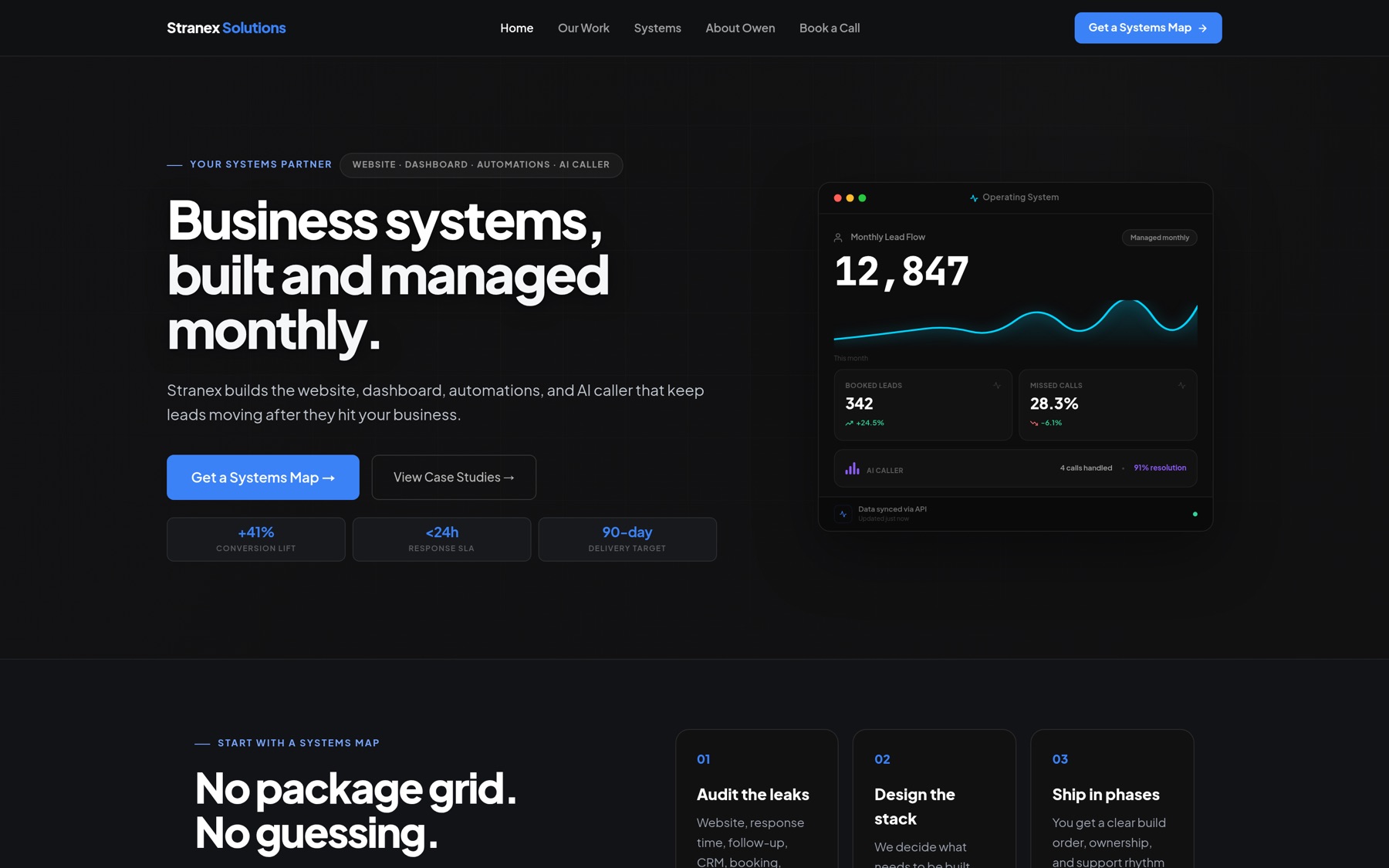
Today I apply that same systems logic to service businesses bleeding revenue through missed calls and manual data entry — building Stranex OS to replace fragmented, duct-taped workflows with native, AI-driven infrastructure.
The AI front desk for pressure-washing and exterior-cleaning crews. Answers every call 24/7, books the job, texts the customer, and runs quotes, invoices, and scheduling from one dashboard — so a $1,200 job never goes to voicemail. Native architecture, no Zapier glue.
An autonomous AI receptionist tuned for high-volume contractors. Answers in 0.4 seconds, qualifies leads, and writes booked jobs directly into legacy CRMs like Jobber and ServiceTitan — recovering revenue lost to missed calls.
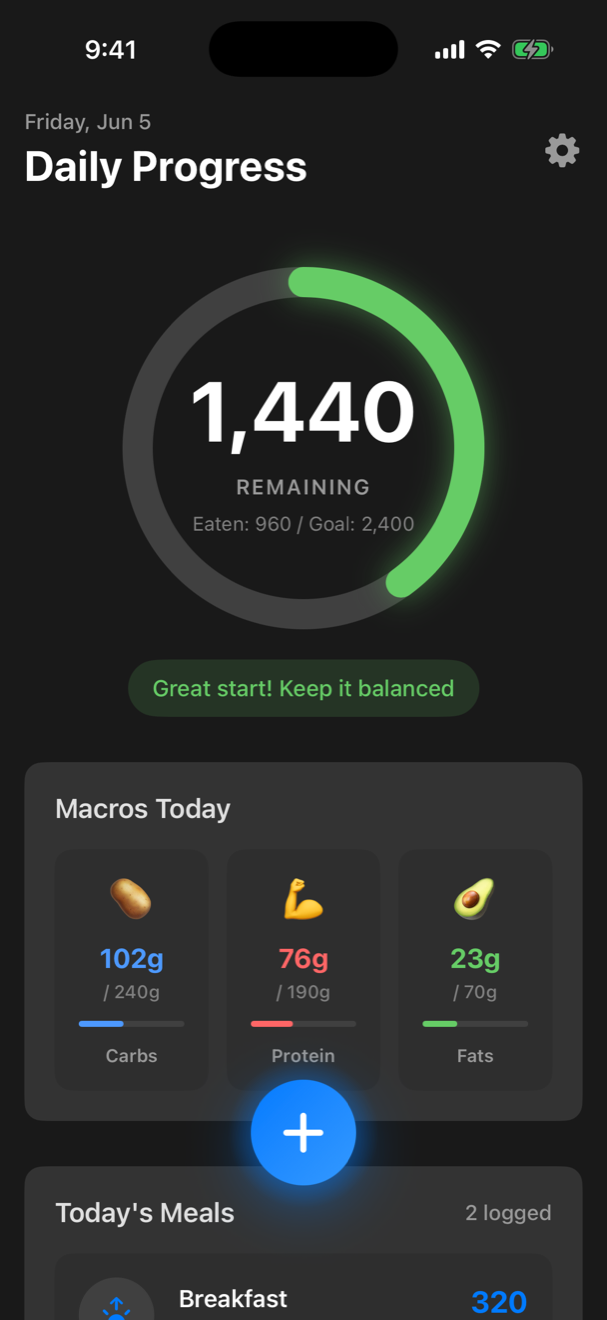
A native iOS app built in Swift/SwiftUI that computes personalized macronutrient targets from goals, biometrics, and inputs using an LLM. Built for athletes who want to stop guessing their numbers. Open source and live on the App Store.
Founded in 2020, during the pandemic. Ran procurement, assembly, brand, marketing, and customer relations end-to-end — and wrote custom software to tune each build. The first real business, with real customers across Charlotte and beyond.
Engineering proprietary operational infrastructure and AI systems for service businesses. Architected Stranex OS, launched Handsline, and deployed native automation that recovers lost revenue.
Built a custom-PC business in 2020 — procurement, assembly, brand, marketing, and CS end-to-end, plus custom OS-tuning software and a hand-coded storefront.